Title gone to the dogs?

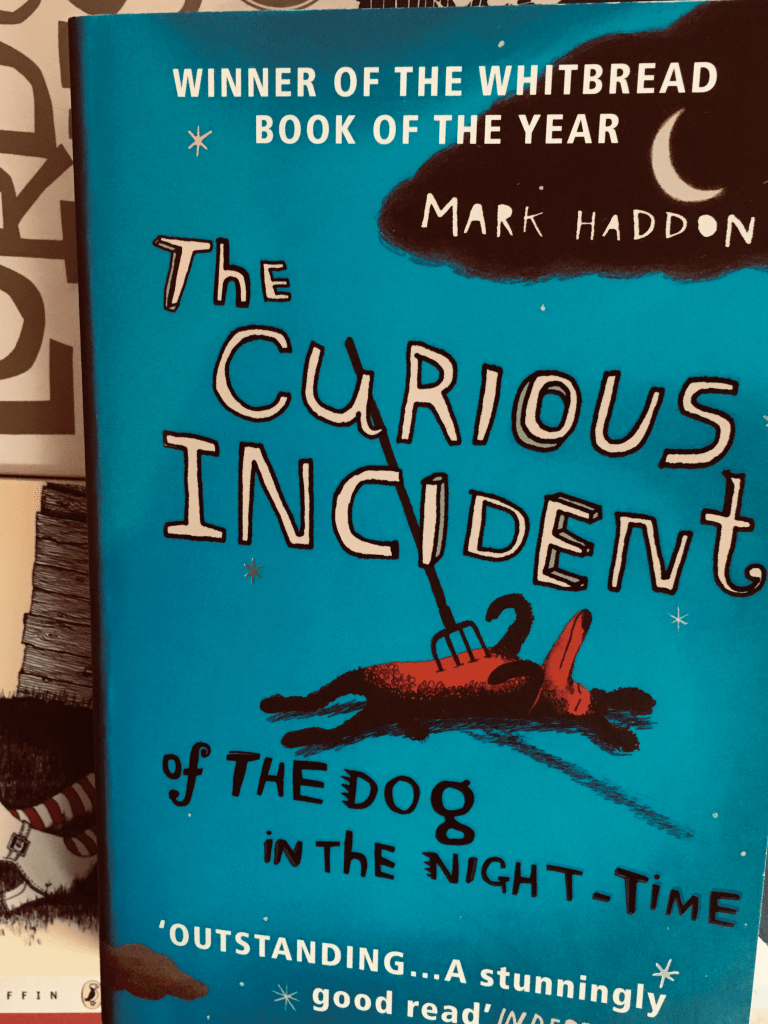
The Curious Incident of the Dog in the Night-Time should be called the Curious Incident of a Misleading Title that has way more going on. The title suggests that the reader is going to find out about an incident involving a dog at night-time. Well, that part is true. However, whilst Christopher, the book’s protagonist, is playing a detective role to find out how the neighbour’s dog died, he stumbles upon some letters from his mother hidden away in a wardrobe. Now I hear you say: why is this important? Christopher’s dad told him that his mother had died, whereas the letters suggest she lives in London, and is totally alive. Family issues right, we all have them! If there’s one thing Christopher doesn’t like, then it’s lying. This leads to Christopher running away from home. Outraged at his father for lying, Christopher puts on his detective hat once more and pledges to find his mum.

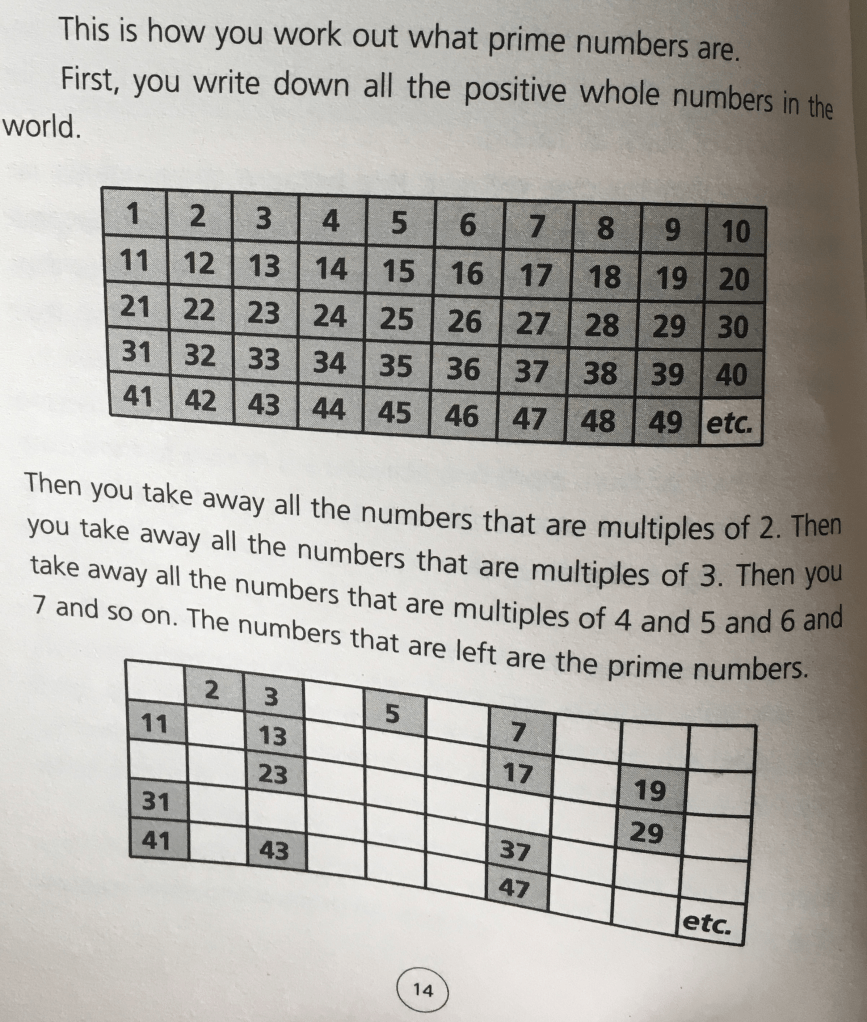
At this point in my blog, it’s probably best to mention what type of character Christopher is, as the book is written from his perspective. You see he’s not really the 15-year old boy most people would expect. He is an extremely intelligent young boy who knows “all the countries of the world and their capital cities and every prime numbers up to 7,507” (Haddon, 2004, p2). Christopher loves math because it’s logical, straightforward and has a definite answer, unlike life. Each chapter is illustrated with prime numbers, simply because Christopher likes prime numbers. He even dedicates chapter 19 to explaining how to work out what prime numbers are. But I’m not going to get into that because unlike Christopher, I hate math.

What’s interesting to note from looking at reviews about the book online is that they all mention Christopher as having Asperger’s disease or being on the autism spectrum. The only place I have read this is on the back cover of the book. Did the publishers write the summary on the back cover, or Mr Haddon himself? Now, I’m not saying that Christopher doesn’t have any of these disorders, but in the book itself I couldn’t find proof that he does. In that respect, I admire the writer for not wanting to label Christopher but instead describes him as the unique person he is.

“The word metaphor is a metaphor. I think it should be called a lie because a pig is not like a day and people do not have skeletons in their cupboards.”

Haddon, 2004, p20
Haddon, 2004, p14

The structure of the book is quite appealing. Appealing because it is different from other books: it has prime numbers, diagrams, math puzzles and smiley faces being incorporated throughout. As I’ve already mentioned, the book is written in the first person point of view, that person being Christopher. Its narration is strictly obedient: avoiding the use of metaphors, using excessive logic and paying extreme attention to detail. This, of course, reflects Christopher’s mind-set: how he views life and the colours he adopts as coping strategies.

The book, in all its glory, is packed with humour, although that usually derives from Christopher’s naivety: through his misunderstandings in situations, and his desire to be overlooked by people unknown to him. I sense that Christopher is caught in Erikson’s identity versus confusion stage. The importance of this stage is making social relationships; something that Christopher struggles enormously with. Certainly, he has discovered his own personal identity, but “how they fit in to society” is what makes teens insecure about themselves (Erikson, 1970, p4). This makes the book so appealing to the young readers, and even adults, as Christopher has challenged himself to find his mother in London. Going into a world unknown, alone! This is Christopher’s mission in making the step into adulthood. From a boy who doesn’t like to be touched, who doesn’t engage in social interactions, who has a charmingly weird way of looking at life, to an adult that can travel “about 100 miles away” and unlock his freedom to the outside world (Haddon, 2004, p164). I believe that young readers may find themselves in the same positions as Christopher, not necessarily meaning that they must go on a mission to find out who they are, rather being able to relate to Christopher feelings and struggles in making new relationships. In the book, Christopher doesn’t make friends easily; he is only close to his teacher Siobhan. Young readers may find themselves in the same situation in a particular stage of their life. They may find comfort and confidence in reading the Curious Incident.

Appleyard (1991, p6) suggests that “the adolescent turns to the realism of the book as the criterion of its acceptability”. Now here’s where my peers and I have also discussed the ‘crossover’ term. The book’s realism not only relates to young readers, but also to the adult readers. Perhaps parents reading this book can learn what not to do to their adolescents. As well as parenting skills, adults can read this book and understand the issues adolescents have when they go through a spell of uncertainty, or how adolescents may view the world differently. The book would be an enjoyable and insightful read for young 14 year olds and above. As Rees (2003) put it: the gap between adult and children’s books “has blurred almost to invisibility”. The Curious Incident unequivocally falls into its spell.

At the end of the book, Christopher gets to move back to his neighbourhood with his mother, established contact with his dad and is given the gift of a Golden Retriever. His love for the A Level Maths test waits before he dreams of going to University in another town. A happy ever after ending which begs the question: was the title descriptive after all?

Yes and yes.

Yes: if the dog hadn’t been killed, Christopher would probably never have found the letters from his mother, which set everything in motion. And the second yes: it is a title of how Christopher with his special mind would describe it, which you can only understand after reading the book.

And with that, I have successfully completed another blog. Thank you all for reading and who knows, this wanderer may have more in store in the future as the reading journey continues.

Bibliography:

Appleyard, J. A. (1991). Becoming a Reader. Cambridge: Cambridge University Press.

Erikson, E. H. (1970). Reflections on the dissent of contemporary youth. International Journal of Psychoanalysis, 51, 11-22.

Haddon, M. (2004). The Curious Incident of The Dog in the Night-Time. London, Great Britain: Vintage books.

Rees, J. (2003). We’re all reading children’s books. http://www.telegraph.co.uk/culture/books/3606678/Were-all-reading-childrensbooks.html. Retrieved 5 April, 2020.
The movie or the book…

A reoccurring theme in my blogs so far is the mentioning of movies. How did The Hobbit come into my life? Yes, a movie. I apologise, but I must mention one of my favourite movies first: the Lord of the Rings! The book will come later, promise.

I remember the joy and fulfilment that LotR gave me: the characters, the adventures, the mystical place names like Mordor, Rivendell, the Shire, Black Forest and many more. But, after leaving that cinema car park I realised that it was all over, finished! I thought to myself: what is going to be the next big blockbuster movie that grabs my attention. Will they make a sequel to the LotR? Could they bring Sauron back? Unfortunately no, but I felt eager to digest more if it would ever come.

So…many moons later I heard of a book that had been published called The Hobbit! What?! And it is the prequel to the LotR. But, the thing was, the last LotR movie had been released in December 2003.

This image has an empty alt attribute; its file name is hobbit-1.jpg
9 years later…

There were two major problems with this…

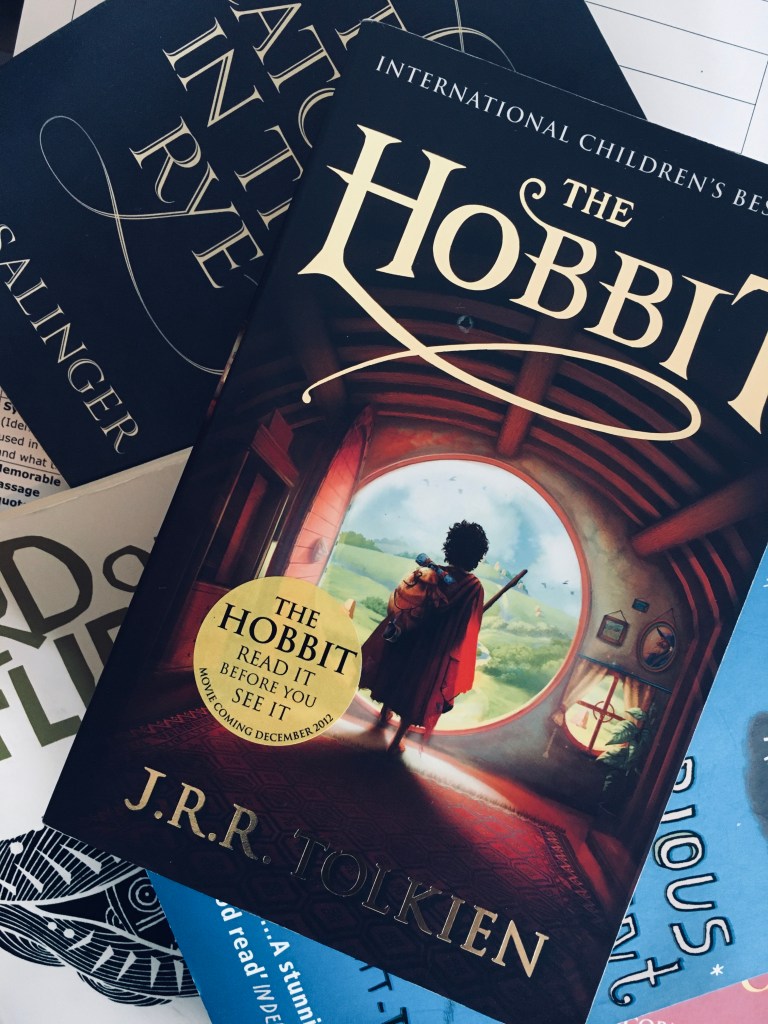
First of all, it was the midst of the year 2012 and this prequel movie coming in December 2012. Could I wait so long or should I just read the book? The book did seem to suggest that I should read it before I see it (as you can see the yellow sticker on the image on the right).

Secondly, and more importantly: HOW ARE THEY RELEASING A PREQUEL A WHOLE NINE YEARS AFTER THE LORD OF THE RINGS ENDED?!

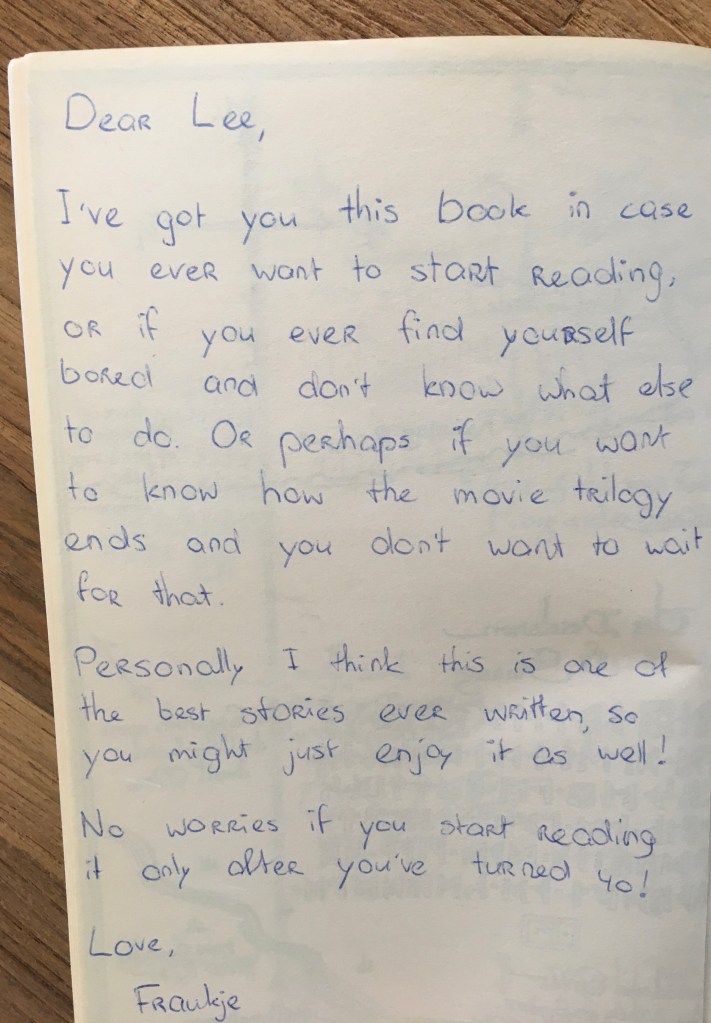
I soon accepted the weirdness of that last fact, and turned to more important things: should I read it or should I wait another six months to watch it? Honestly…December 2012 quickly approached and I hadn’t read it. Then, ironically I was given it as a gift, and it was actually the note inside that made me read the book…

Now, after that, lets get to The Hobbit. As Fraukje mentions in her note, it was truly a great story and a pleasant read. What makes the book intriguing is that I already knew the characters: Bilbo the protagonist, Gandalf the Grey, the egocentric dwarves. These characters were fiction being utilised at its best, or as Austin (2002) said: “Fiction requires a balance between elements of the strange and the familiar”. In the first chapter ‘an unexpected party’, Gandalf, the wizard, sat at the head of the table with 13 dwarves, and a hobbit. Not quite the typical party wouldn’t you say?

The unexpected party was a sneaky way for Gandalf to trick Bilbo into joining an adventure to the Lonely Mountain, to raid the treasure on which Smaug lays. The dwarves being robust yet greedy wanted the treasure back. The journey began from Hobbiton in the West to the Lonely Mountain in the East and back again. Along this “mission…quest…thing” (Jackson, 2001), readers could recognise Bilbo’s character development from a person who felt that adventures were “nasty disturbing uncomfortable things” (Tolkien, 2012, p15) to a more ballsy and lenient hobbit who rescued his dwarf accomplices after being captured by spiders. He had left his easy going, snug life to become daring by stepping out of his comfort zone, going on adventure filled with capture, escape and problem solving situations.

During class discussions, we couldn’t overlook the connection between Bilbo and Gandalf. Gandalf is portrayed as a father and wisdom figure. He knows the challenges that lay ahead will evolve Bilbo’s characteristics, so he provides enough “pocket-handkerchiefs and tobacco” (Tolkien, 2012, p46) for the beginning of the journey that Bilbo can’t turn back. Gandalf instills extreme confidence in Bilbo, almost acting as his teacher before leading the quest, and also without his presence, to the Palace of the Elvenking and Smaug’s Lair. This indicates Bilbo’s growth. Having said this, there are also more conflicting passages, which lead to the question: is Bilbo having an identity crisis? Well, it’s complicated! Even though he needed a little nudge from Gandalf, I would put Bilbo in Erikson’s “moratorium” state, as he is actively involved in exploring this adventure. But as we know from the sequel, Bilbo doesn’t commit to being a journeyman until he hands, or drops the ring to Gandalf and leaves The Shire for Rivendell to stay with the Elves (Erikson, p5). So, he hasn’t really made a commitment, rather, he was happy to be back in The Shire playing invisibility with his magic ring.

Another interesting comment made by my classmate was the realism between The Battle of Five Armies and World War 1. As Austin (2002, p5) puts it, “even the most elevated and fantastic story must possess a certain amount of emotional realism”. Tolkien, after finishing his studies at Oxford, enlisted in the British Army where he spent four months in the trenches, witnessing first hand the “Battle of the Somme” in 1916 (National Archives, n.d). Here, Tolkien was able to bring close resemblances of realism into his fictional book. Therefore, giving this fantasy novel a “true to life” edge so readers can easily imagine similar situations (Appleyard, 1991, p12). Minus the talking trees of course.

The Hobbit cannot be analysed without drawing attention to Tolkien’s narrative style. Written in the third person omniscient, we see the story being told through the eyes of Bilbo. The quote below reveals that the book’s diction is written in an old style.

“Where did you go to, if I may ask” said Thorin to Gandalf as they rode along.

“To look ahead”, said he.

“And what brought you back in the nick of time?”

“Looking behind”, said he.

Tolkien, 2012, P61

Most authors would modernise the above sentences to say ‘said Gandalf’ or ‘replied Gandalf’ and not ‘said he’. Tolkien is staying consistent in Bilbo’s language choice throughout the entirety of the book. One would think that such an old writing style would be difficult for young readers to comprehend. On the contrary, Tolkien’s diction is kept “consistent, simple and relatively formal” so the reader can easily follow (Austin, 2002, p3). As well as that, younger readers will appreciate the motifs; good meets bad, the heroes overcome the challenge and the good triumphs. Taking into account all the fictional elements, the language used and the book’s realism to history, I would recommend this book to children 8 years old and beyond.

This epic fantasy novel did itself justice. Go and read this book! Explore the journey with Bilbo and his crew. Get lost in the fictitious settings and admire a finely written masterpiece of elves and dwarves, goblins and trolls. And if you are anything like me, you’ll be disappointed with the outcome of the movies… because you’ve read the book first.

Lastly, to Fraukje, “thank you” said I!

Bibliography

Appleyard, J.A. (1991). Becoming a Reader. Cambridge. Cambridge University Press.

Austin, A. (2002). Quality in Epic Fantasy.
http://strangehorizons.com/non-fiction/articles/quality-in-epic-fantasy/
Retrieved 25 March 2020.

Erikson, E.H. (1970). Reflections on the dissent of contemporary youth. International Journal of Psychoanalysis, 51, 11-22.

Jackson, P. (2001). The Lord of The Rings: The Fellowship of the Ring. New Zealand. New Line Cinema.

National Archives. (n.d). People: Officer’s Service Record: J.R.R Tolkien.
http://www.nationalarchives.gov.uk/pathways/firstworldwar/people/aageson.htm Retrieved 24 March 2020.

Tolkien, J.R.R. (2012). The Hobbit. Great Britain. Harper Collins.

The Part-Time Indian

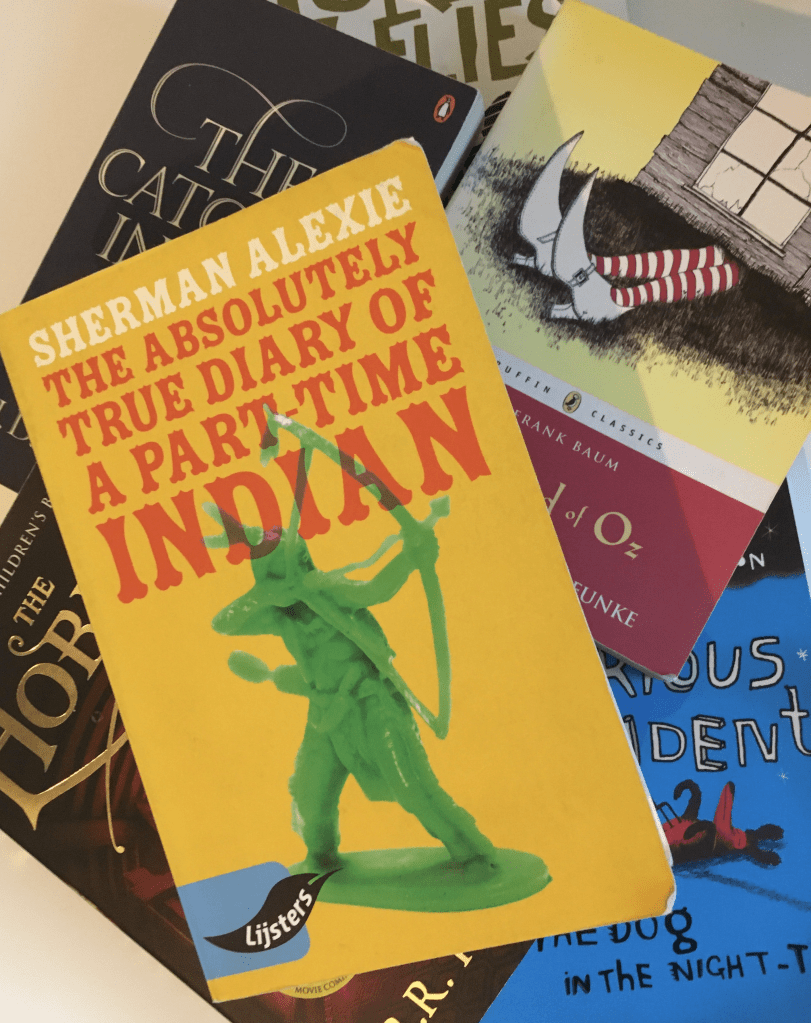
The Absolutely True Diary of a Part-Time Indian is one of my favourite books. To be honest, the title was the first thing that caught my attention, the cover on the other hand, minus points. And interestingly, for those of you who didn’t check, there is no movie made about this book…yet! Although, according to IMDB, it is currently in development.

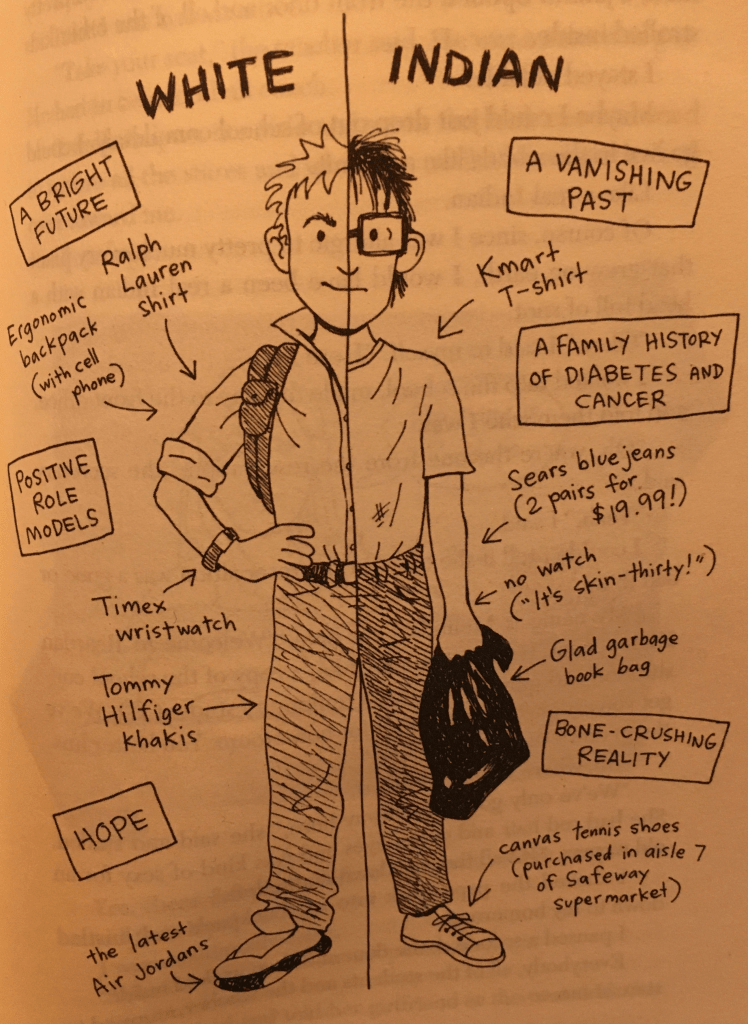
Anyway, back to the book. Sherman did an excellent job describing the main character, Junior, throughout the entirety of the book. Junior is an intelligent Native American boy who expresses himself by drawing cartoons whilst living in the Reservation. Cartoons are an essential part of the book. One day, his teacher, Mr P, told him that he must leave the Rez if he wants to make something of his life. People who stay on the Rez “fade away” (Alexie, 2015, p40), they are drunks who give up on hope and never reach their potential. So, Junior decides to leave the Rez and go to an all-white school.

Alexie, 2015, p57

Junior begins his new part-time life. Or, as Appleyard (1991) describes it: his “divided selfhood”, where his inner self is authentic but he changes his outer self to deal with his new school. He starts his new life using his real name Arnold Spirit instead of Junior, which is the name he is known as on the Rez. This was his first step in building new relationships and learning how to adapt to a different society. He finds Penelope, a girl who becomes his major crush. Gordy, who teaches him that learning can be joyous. And of course, basketball, where Junior shows off his shooting skills. Life seems to be good for Junior, right?

Actually not quite! Junior is poor, really poor. His father is a drunk and his mother fell into the exact trap that Junior is trying to avoid: being intelligent but not pursuing a career because you’re Indian and “deserve to be poor” (Alexie, 2015, p13). Oh, and did I mention that his best friend from childhood hates him because he left the Rez? Well, he does and he doesn’t make an effort with Junior until the death of Junior’s grandmother from a drunk driver and tragic death of his sister in a caravan fire. These deaths are heartbreaking, although Junior brushes it off without showing much emotion and moves swiftly onto the next date in his diary. Junior is caught trying to do the best for himself but is seen as a traitor because he has left the Rez. He was described as an apple, “red on the outside and white on the inside” (Alexie, 2015, p132). In a way, I feel like I can relate to Junior, which is probably why I enjoyed the book so much. Although not in the extreme circumstances he has gone through, I left Ireland because of an economic crisis, which hit my town pretty bad. I moved to South Korea to work as a teacher. Like Junior, I had to find my feet, make new friends and experience life in a way I could never have done by staying in my hometown. My parents and friends accepted my decision to leave, just like Rowdy accepts Junior’s decision to seek a better life.

Alexie, 2015, p96

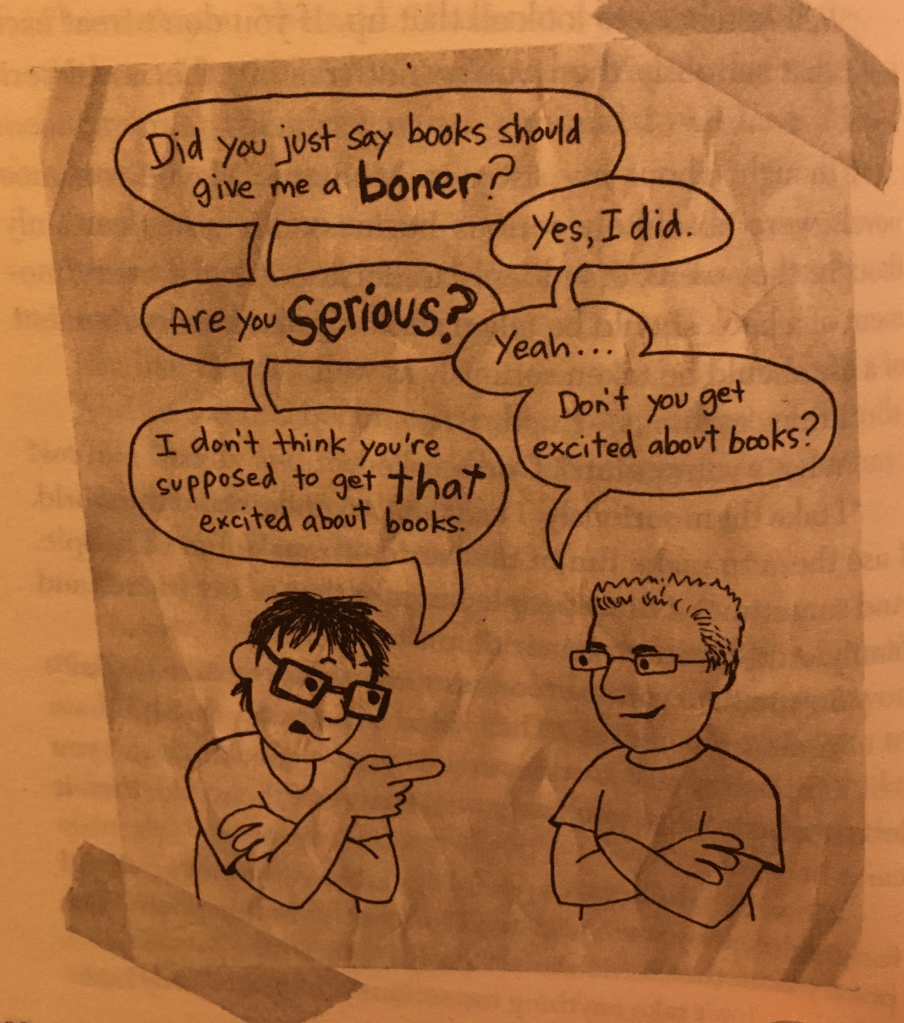
The fact that Sherman grew up on the Spokane reservation in Washington State (Campbell, 2003) adds to the authenticity of the book. He is able to reveal, first-hand, how life is lived as a Native American. The whole novel is written in a funny style and makes excellent use of cartoon drawings to mirror a young teenage boy who is in the middle of an identity crisis. This refers to a low inferiority status, no encouragement from his parents, yet he finds the confidence to “explore his independence” and successfully build new relationships by “effectively exploring identities” (Erikson, 1970). Sherman can make life a little more difficult when trying to determine the age suitability of this book, as there is quite a lot of slang and swear words. “Boner” (p96), “dickwad” (p48), “wuss, pussy” (p51), are just some of the swear words used in the book. However, Sherman doesn’t use these words to express violence or aggressiveness, I feel that he uses them to keep the book more realistic and true in order to build a strong connection with the teenage readers. With that said, I’d recommend this book to readers of 12 years and older.

“Can you blame me for staring at her all day long?”

(Alexie, 2015, p113).

“Can you imagine a place where white people are scared of Indians and not the other way around?”

(Alexie, 2015, p90).

The quotes above reveal Sherman’s unique writing style, which creates somewhat of a conversation with the reader. When discussing with my peers, we all felt that we became a part of the book and began to focus on the deeper meaning of the book. Sherman makes you feel like you are in the story, all the while trying to convey a message to teenagers, by showing them that they can overcome their problems and encourage them to achieve more just like he did. The book has made a lasting impression on me. It has given me a better insight on the life of Native Americans and the struggles they have and still encounter. The book is a fantastic read because of it’s real to life, funny and truly heart-breaking story. As mentioned earlier, the film adaptation of this book is being developed, which is exciting news. However, and I may be a little bias towards the book having enjoyed it so much, but I don’t think it will have the impact to beat the original.

Bibliography

Alexie, S. (2015). The Absolutely True Diary of a Part-Time Indian. London: Andersen Press Limited.

Appleyard, J.A. (1991). Becoming a Reader. Cambridge: Cambridge University Press.

Campbell, D. (2003). Voice of the new tribes. Retrieved from: https://www.theguardian.com/books/2003/jan/04/artsfeatures.fiction

Erikson, E.H. (1970). Reflections on the dissent of contemporary youth. International Journal of Psychoanalysis, 51, 11-22.

The Magical Land of Oz

I had already made up my mind that I would read The Wizard of Oz for my literature assignment. It is regarded as a classic book, which seemingly everyone has read at some point in their lives.

Well, I haven’t. My girlfriend came up with a thoughtful idea that we should watch the movie to give me an idea of what to expect. So one evening, relaxing on the couch with crisps and chocolate, we watched the 1939 Wizard of Oz.

I hated it!! I couldn’t see past the square image, the black and white picture, the poor visual effects and dare I say it, the acting! Sorry Judy! Needless to say, I judged the movie by its cover! I wanted the movie to end quickly and doubted my decision to read the book. Nevertheless, people always say the book is better than the movie. In my case, this proved to be true.

“The silver shoes are yours, and you shall have them to wear”

Baum, 2008, p13

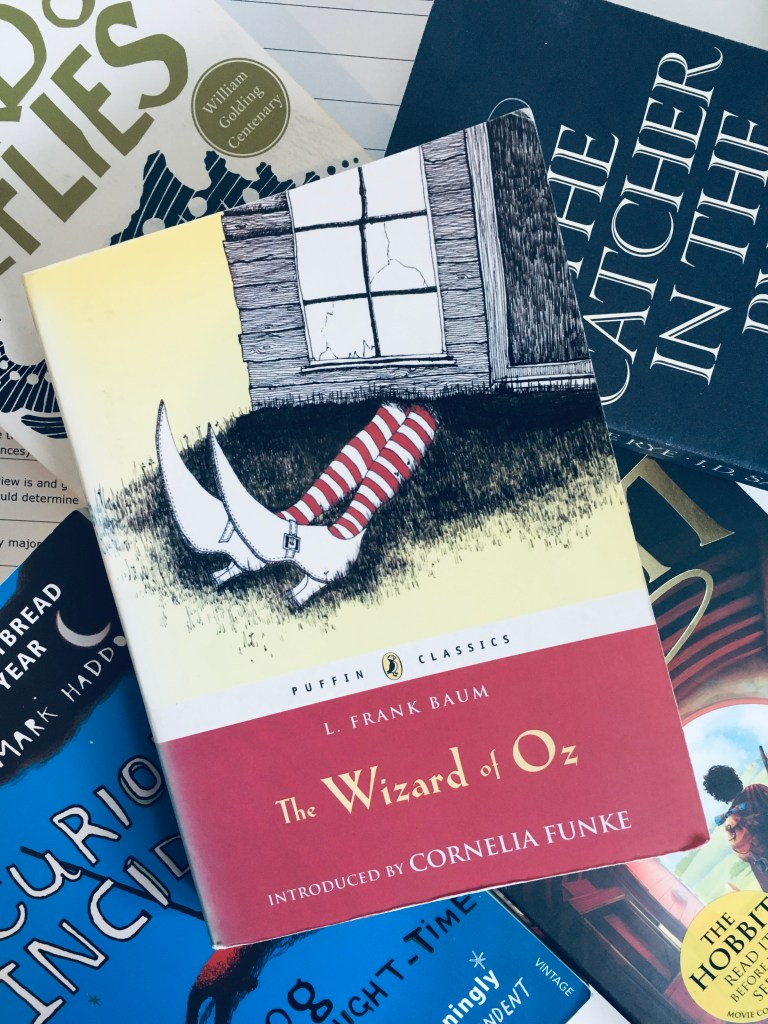
My first impression of the book was the actual cover. Didn’t I see Dorothy wearing red shoes in the movie? But in the book she’s wearing silver shoes, one of the many differences between the book and the movie. Anyway, let’s not get bogged down on the movie and focus our attention on the book. I mentioned earlier that the Wizard of Oz is regarded as a classic. Why? It portrays the typical structure that appeals to young readers. But how? Well, generally speaking, the story has the heroic character in Dorothy, who is faced with the problem of wanting to get back to her aunt and uncle in Kansas. She must go on an adventure in the magical land of Oz. Along the yellow brick road Dorothy encounters rather “semi-human figures and creatures” who all have their own problems (Appleyard, 1991, p5).

Yes, said the Woodman, ‘at least I shall get my heart’.

‘And I shall get my brains,’ added the scarecrow joyfully.

‘And I shall get my courage,’ added the Lion thoughtfully.

‘And I shall get back to Kansas,’ cried Dorothy, clapping her hands.

Baum, 2008, p118

Finally, after all the repetitiveness has been overcome, the young reader learns of a happy ever after ending, where Dorothy finds her way back home. These aspects of structure ensure that young readers “can cognitively grasp and affectively identify” with the book (Appleyard, 1991, p5).

In class discussions, we decided that as adults we really do have a different taste in books than we did as a child. In children’s literature, the story is the plot and when children get older, the expected sequence of the plot alters to aid the reader. In saying that, adults could see this book in a different light if they look closely at its symbolisms.  In our group discussions, I researched that the book had many elements of political symbolisms. Bahm, before becoming an author, was a political reporter who observed the rise of the Populist movement among farmers in the mid 1890s where they addressed economic issues in the United States (Harvey, 2019). From this perspective, we can see Dorothy as the average American girl who is willing to face the unknown. The Scarecrow without a brain suggests that farmers aren’t as stupid as you’d think and have actually started their own People’s Party. The Tin Woodman represents the high level of unemployment in factories while the Witch can be seen as the financial elite who occupies such places like Wall Street or bankers. The Emerald City aka the White House, occupied by the Wizard, you guessed it… the President of the USA. Are these symbols correctly portraying the characters and settings of politics in the USA? Well, it does make for an intriguing discussion and although the assumptions do fit into the context of the story, young readers between 8-12 years old should enjoy the story from a creative and imaginative perspective. Whereas, the adult readers can look into the nitty gritty of literature elements. In the end, my peers and I can all agree that the book is “uncomplicated and repetitive” alluring to Appleyard’s (1971) structure where evil is always overcome.

“I have been wicked in my day, but I have never thought a girl like you would ever be able to melt me and end my wicked deeds”.

Baum, 2008, p112

The quote above shows Dorothy being perceived as an innocent young girl who has surprised the Witch who stood in her way. However, she is also capable of bringing out the best in others by instilling self-confidence in her relationships with the Lion, the Tin Woodman and the Scarecrow. Dorothy emerges from this story with a strong “sense of self and a feeling of independence and control” (Erikson, 1970). With this, Dorothy is clearly in-between Erikson’s fourth and fifth stages of development, which is something every child goes through. Dorothy strives to overcome obstacles in her way of reaching the Emerald City, while showing a high level of competence. That’s what makes this book appealing for young readers in the age of 8-12 years old. They can relate to the characters and learn that they can explore their own competence and identity.

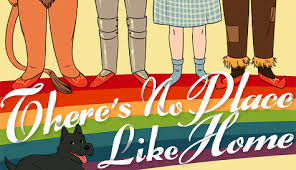
The Wizard of Oz is a fantastic book, which sends a clear message to young readers, which is: be helpful to the people you meet in your discovery of the world. Anything can happen along your adventure in realising your true identity. Wise words from this wanderer would be to remember who you are and where you come from, because at the end of the day, “there’s no place like home” (Wizard of Oz, 1939).

Image result for theres no place like home
Magnet Theater Image

(And yes that is a quote from the movie, which I did watch till the end)

Bibliography

Appleyard, J.A. (1991). Becoming a Reader. Cambridge: Cambridge University Press

Baum, L. F. (2008). The Wizard of Oz. London: Puffin classics.

Baum, L. F. (1939). The Wizard of Oz. Hollywood, California: Metro Goldwyn Mayer.

Erikson, E.H. (1970). Reflections on the dissent of contemporary youth. International Journal of Psychoanalysis, 51, 11-22.

Harvey, I. (2019). The Political and Economic Symbols Hidden Inside the Wizard of Oz. Retrieved from: https://www.thevintagenews.com/2019/04/12/wizard-of-oz-symbolism/

Magnet Theater. (2005). Retrieved from: https://www.google.com/search?q=theres+no+place+like+home&sxsrf=ACYBGNQbOhMliENTGuOf2xbeXx4bOy5HRQ:1581775873541&source=lnms&tbm=isch&sa=X&ved=2ahUKEwjT2rmo3tPnAhUHuRoKHYKxDKkQ_AUoAXoECBIQAw&biw=1280&bih=640#imgrc=H-jaRPiY18Xr8M

“Not all those who wander are lost” J. R. R. Tolkien

Hey everyone!

Well, this is my first step in creating a blog. I want to let you in on a little secret about reading. Like Aragon, the famous king from Lord of the Rings, I have wandered. Not from being king but from reading books! Only to be working as a teacher and regretting the time I have spent away from the smell of a fresh new book. How did this happen?
To answer this, I need to rewind time to my 12-year old self in primary school. Every Friday for the last hour of school our teacher would let us choose a book from the library. Without hesitation, I’d choose the old worn copy of the Fantastic Mr. Fox. I read it over and over. I remember the happiness and fulfilment it gave me. I loved reading it. Many moons later, I can’t recall a single characteristic from the book. As much as this disappoints me, I have wandered away from reading. Instead, TV took over and became my number one source of entertainment. The endless questions I have encountered over the years.. Lee, have you read The Hobbit? No, but I’ve seen the movie! Lee, how amazing was Harry Potter? Wait..it’s not in cinema until next year, how should I know? I distant myself from reading until, at 30, I decided to become a teacher.
You are probably thinking, surely TV isn’t only to blame? To be honest, it’s not. Secondary school arrived with countless reading assignments; Silas Marner, Romeo and Juliet, Hamlet, Wuthering Heights, Macbeth, To Kill a Mockingbird, the list goes on! I had zero interest in these books, and I had no choice in the matter. You must read these books if you want to pass your Leaving Cert Ms. Curran would say. Telling a 15-year old Lee, to be or not to be was the question, to which Lee couldn’t careth less.

After years where books were non existent in my pleasure time, I have come to this conclusion… I didn’t realise which genre suited my personality. Until one day, whilst being severely delayed at Seoul International Airport, I wandered into a bookstore where a limited amount of English books were available. Inferno? By Dan Brown? Okay, I’ll give it a shot! My strategy for choosing Inferno was to look for a simple book cover, and preferably a best seller! 🙂 Since then, I have read most of Dan Brown’s novels and can comfortably say that I enjoy a thrilling fictional genre that has my heart racing.

In the blogs that follow, I wish to share my opinions on a range of different books connected to different genres. I’m going to share my thoughts and possibly ruffle some feathers. Feel free to comment on whether you agree or disagree with the judgements of a wanderer.

Thanks for reading my story!

Design a site like this with WordPress.com
Get started